Overview
In generating audiobooks, one of the key elements are characters. They are the ultimate assembly of all the components we have seen so far. A “narrator” character must always exist in every project. Characters are also 100% defined for a single project.
Scope of Characters
In order to avoid large lists of characters, a user can choose to separate them into the following categories:
- Main
- Secondary
- Generic
- Structure
- Human
Structure “characters” are used to change voices and tone for such things as “chapters,” authors introduction and the narrator. Human characters will require importing audio files record by a human being. See Human Narrators for more information.
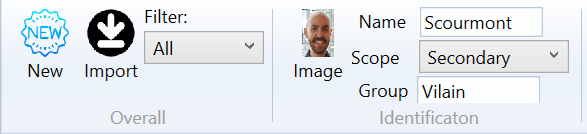
For Main and Secondary characters, there can be an arbitrary group assigned like “good” “villains” “family”…
Human, Main and Secondary characters can also have images uploaded if that helps, while generic character can have a nickname in each chapter or scene (depending on document splits). This avoids defining whole new characters for each waiter, attendant or passer by, while still maintaining local meaning like: Man1 => Bartender in Chapter 1 and Man1 => Parking attendant in Chapter 3. Those can’t have images uploaded.
Definition of a Character
Here are the main blocks defining and controlling how A.B. Genesis will use the character to transform the text into audiobook grade audio.
Identity
The identity is pretty ordinary. Name, image, scope and group are the essential elements. Although there are no actual limits on a character name, it should remain short and typically a single name as it can start consuming a lot of screen space in the editor.
Voice and Voice Modifiers
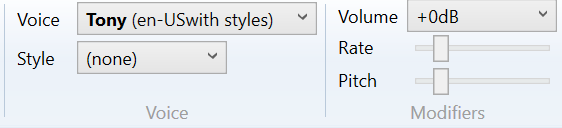
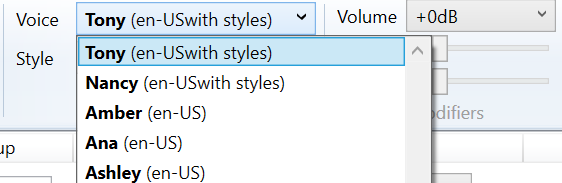
Selecting the voice in here might not be optimal as it is crucial to spend some time in the voices section to easily compare voices and pick the right one. But here it is anyhow. If the voice supports Styles, a permanent one can be selected here or Style will show “n/s”. Volume, rate and pitch can be set here too.
Foleys and Effects
On top of adding a mandatory effect to the character (ex: Echo for a computer voice, or noise for a walky-talky), the speech for a character can be decorated by foleys. Example, a dog could have a bark put prior to any speech. A trucker could have the clicks from a AM radio before and after. The “During” effect is further developed by “Fill” (left, right, center, justify)

 Christian-Eric Falardeau